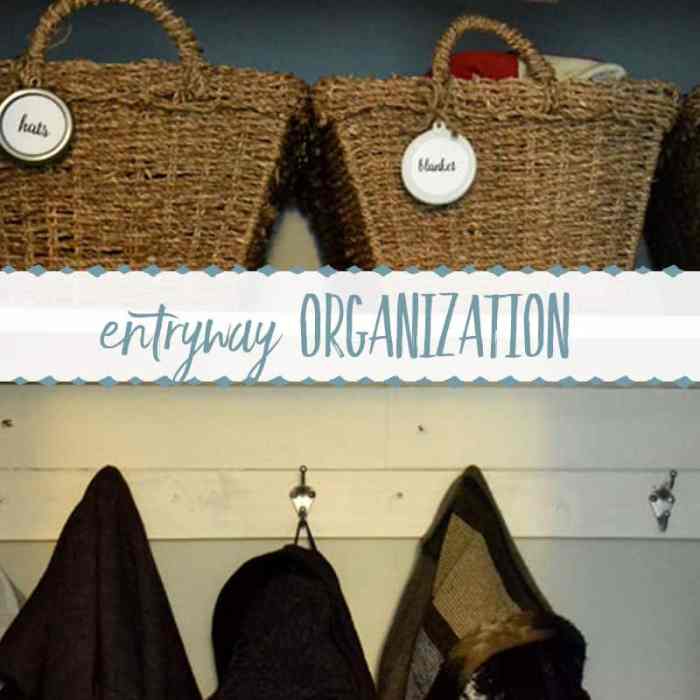
Transforming a chaotic entryway closet into a haven of order and efficiency is more achievable than you might think. This guide provides a practical, step-by-step approach to conquering closet clutter, maximizing space, and creating a functional and stylish entryway. We’ll explore decluttering strategies, effective storage solutions, and organizational techniques to help you achieve the entryway of your dreams.
From assessing your current closet situation and purging unwanted items to optimizing storage and implementing a maintenance plan, we’ll cover every aspect of the process. Learn how to choose the right storage solutions, arrange items for easy access, and even incorporate design elements to enhance both functionality and aesthetic appeal. Get ready to unlock the potential of your entryway closet!
Organizing Items for Easy Access

Effective entryway closet organization hinges on easy access to frequently used items. Strategic placement and categorization are key to minimizing daily clutter and maximizing space. By prioritizing accessibility, you’ll streamline your morning routine and maintain a more organized entryway.
The principle of organizing by frequency of use is paramount. Items accessed daily, such as keys and umbrellas, should be readily visible and within easy reach. Less frequently used items, such as seasonal coats or holiday decorations, can be stored further back or higher up. Categorization helps maintain order; grouping similar items together simplifies locating specific things. This intuitive system promotes efficiency and reduces the frustration of searching through a jumbled closet.
Shoe Storage
Efficient shoe storage maximizes space and minimizes clutter. Consider using tiered shoe racks to create vertical space, particularly beneficial for narrow closets. For a visually appealing and easily accessible arrangement, place frequently worn shoes on the lowest shelves. Seasonal or less frequently worn shoes can be stored on higher shelves or in designated bins. Consider clear storage bins for easy identification of contents.
A well-organized shoe section contributes significantly to the overall impression of a tidy entryway.
Coat and Bag Arrangement
Coats should be hung neatly on appropriately sized hangers to prevent wrinkles and maximize space. Group similar items together—all winter coats together, lighter jackets together, etc. Longer coats should be hung on the outside of the rack, allowing easy access. Bags can be stored on shelves above or below the coats, or in designated storage containers. Consider using hooks on the inside of the closet door to hang smaller bags or accessories.
A visual representation might show coats hanging neatly, with bags neatly stacked or hung on hooks in a designated area, ensuring each item has its dedicated space.
Accessory Organization
Hats and scarves, often small but numerous, can easily overwhelm a closet. Utilize vertical space by employing wall-mounted organizers or over-the-door hooks. Rolling organizers, specifically designed for scarves and gloves, can help compact storage. Small bins or drawers can hold smaller accessories such as gloves, keychains, and sunglasses. A well-organized section might show hats stacked neatly on a shelf, scarves rolled and stored in a drawer, and gloves neatly folded in a small bin.
This dedicated space for accessories prevents these items from becoming scattered and lost.
Visual Representation of an Organized Entryway Closet
Imagine a closet with a tiered shoe rack at the bottom, holding neatly arranged shoes. Above the shoe rack, a hanging rod holds coats organized by type and length, with longer coats on the outer edges for easy access. On the shelves above the coats, neatly stacked bags are stored in designated containers, with smaller bags hanging on hooks on the inside of the closet door.
Above the shelves, a dedicated area houses hat storage and rolling organizers containing scarves and gloves. The overall effect is one of calm order, with everything having its designated place and easily accessible. The color palette of the closet is unified, contributing to the overall sense of organization and visual appeal.
Maintaining an Organized Entryway Closet
Maintaining an organized entryway closet is crucial for a smooth daily routine and a welcoming home. A well-maintained closet minimizes stress and maximizes efficiency, ensuring you can easily find what you need when you need it. Consistent effort, however, is key to preventing it from reverting back to chaos.
A Maintenance Schedule for Entryway Closet Organization
Implementing a regular maintenance schedule is essential for long-term success. This prevents small messes from accumulating into larger organizational challenges. A weekly quick tidy-up and a monthly more thorough cleaning are recommended. The specific schedule should be tailored to your family’s needs and the volume of items stored. For example, a family with young children might need more frequent checks than a single person.
Strategies for Preventing Clutter Buildup
Preventing clutter requires proactive strategies. One effective method is the “one in, one out” rule: for every new item brought into the closet, a similar item should be removed. Regularly purging items that are no longer used, damaged, or out of season is also beneficial. Utilize vertical space efficiently with shelves and organizers, maximizing storage capacity and minimizing floor clutter.
Consider designating specific areas for different items, such as shoes, coats, bags, and keys. This visual organization prevents items from being haphazardly placed.
Making Organization a Habit
Transforming closet organization from a chore into a habit involves integrating it into your routine. For instance, taking a few minutes each evening to put away items before bed can significantly reduce clutter accumulation. Rewarding yourself after completing a closet organization task, such as with a relaxing bath or a favorite book, can also reinforce positive behavior. Setting reminders on your phone or using a visual checklist can provide additional accountability.
Involving Family Members in Maintaining an Organized Closet
Family involvement is key to sustaining a tidy entryway closet. Assign age-appropriate tasks to each member. Children can be responsible for putting away their shoes and coats, while adults can handle more complex organizational tasks. Make it a family affair by scheduling a specific time each week for a quick closet tidy-up. This fosters a sense of shared responsibility and promotes a cleaner, more organized environment for everyone.
Consider using visual aids, such as labeled bins or color-coded storage solutions, to make it easier for everyone to participate effectively.
Entryway Ideas
Transforming your entryway from a mere passageway into a stylish and functional space significantly enhances the overall feel of your home. A well-designed entryway sets the tone for the rest of your house, welcoming guests and providing a practical area for organization. Consider the style of your home and your personal preferences when choosing a design.
Modern Entryway Design
A modern entryway prioritizes clean lines, minimalist aesthetics, and functionality. Imagine a sleek console table made of light oak or lacquered wood, featuring minimalist metal legs. Above the console, a large, rectangular mirror reflects light and visually expands the space. The walls are painted a calming neutral shade, such as a soft gray or beige, allowing the furniture and accessories to stand out.
Integrated LED lighting strips under the console table provide subtle, functional illumination. The overall effect is one of sophistication and understated elegance.
Rustic Entryway Design
A rustic entryway evokes a sense of warmth and natural charm. Think of a reclaimed wood bench with a distressed finish, providing ample seating. A woven storage basket sits beneath the bench, offering a casual storage solution for shoes or accessories. The walls are adorned with a warm, earthy color palette, such as a deep terracotta or a muted sage green.
A wrought-iron coat rack adds a touch of vintage charm, while a simple pendant light made of natural materials, such as woven rattan, provides soft, ambient lighting. The overall feel is inviting and cozy.
Traditional Entryway Design
A traditional entryway exudes timeless elegance and sophistication. A classic mahogany hall tree with multiple hooks and a spacious shelf for hats and gloves takes center stage. A large, ornate mirror in an antique-style frame reflects light and adds a touch of grandeur. The walls are painted in a rich, warm color, such as a deep navy blue or a warm cream.
A crystal chandelier provides dramatic, sparkling light, adding a touch of luxury. The overall design creates a sense of refined style and enduring charm.
Impact of Lighting and Color Schemes
Lighting and color schemes are crucial elements in shaping the mood and functionality of any entryway. Bright, neutral colors create a sense of spaciousness and openness, while darker colors can create a more intimate and dramatic atmosphere. Adequate lighting is essential for both safety and aesthetics. Layering different light sources, such as ambient, task, and accent lighting, provides a balanced and functional illumination scheme.
For instance, recessed lighting can provide general illumination, while a stylish table lamp can offer focused task lighting for reading or writing notes.
Entryway Accessories for Organization and Style
A well-chosen selection of entryway accessories can significantly enhance both organization and style.
- Stylish coat hooks: Offer convenient storage for coats, bags, and umbrellas while adding a decorative touch.
- A decorative tray: Provides a stylish and organized place to keep keys, wallets, and other small items.
- A storage bench with hidden compartments: Offers seating and concealed storage for shoes or other items.
- Wall-mounted shelves: Provide additional storage space for decorative items, photos, or small accessories.
- A stylish mirror: Enhances the space and provides a functional element for last-minute checks before heading out.
By following the steps Artikeld in this guide, you can successfully transform your entryway closet from a cluttered space into an organized and functional area. Remember, the key is a combination of decluttering, strategic storage solutions, and consistent maintenance. With a little effort and planning, you can enjoy the benefits of a well-organized entryway that sets a positive tone for your home and simplifies your daily routine.
Embrace the process, and enjoy the newfound order and peace of mind!
Question & Answer Hub
What if I don’t have much vertical space in my entryway closet?
Utilize slimline shelves, stackable storage bins, and hanging organizers to maximize limited vertical space. Consider using the space under shelves for shallow storage containers.
How do I involve children in maintaining a tidy entryway closet?
Make it a fun activity! Assign them specific areas of responsibility and use visual aids like labeled bins. Praise their efforts and make it a regular part of the family routine.
What are some budget-friendly storage solutions?
Repurpose household items like baskets and shoe boxes. Look for affordable storage solutions at discount stores and utilize DIY solutions where possible.
How often should I declutter my entryway closet?
Aim for a quick declutter every few months and a more thorough declutter at least once a year. This prevents clutter buildup and ensures easy access to items.


